


It is not something deep or difficult. It is simply what you see happening, but no one says it out loud. Technology is moving fast. Institutions are stuck. The words we had are no longer enough. This text is neither a guide nor a prophecy. It is a way to put some order into something that is already burning.
Myth as Manual
What you will get here: an essay on how AI functions as a “new fire,” not because it is magical, but because it is a general-purpose technology that spreads faster than institutions can absorb.
Vocabulary, so you don’t get lost:
- General-purpose technology: a tool that transforms many sectors at once, and therefore reshapes society.
- Institutions: rules, procedures, habits, and structures that keep a society functioning.
- Functionality: the ability of a system to produce decisions and actions with consistency.
- Heuristics: simplified rules or decision shortcuts a system uses when information is incomplete or when instructions conflict.
Prometheus did not “steal” a flame. He tore out the first patent in history and handed it to a species that had neither discipline nor a mechanism of self-control. Zeus was not enraged by the act itself. He was enraged because humans gained power that did not match their scale. From that moment on, the gods stopped being managers and became spectators.
In our time, fire has a different name: Artificial Intelligence (AI). Not as a metaphor for progress, but as a general-purpose technology that leaks faster than the institutions that gave birth to it can endure. Silicon Valley plays Prometheus without punishment. And we, tired, hyper-connected, flooded with fast information and slow judgment, hold a match inside dried pinewood and pretend not to see the glow.
This is not myth. It is a recurring pattern. Only this time, the fire does not burn red. It emits blue light.
Prometheus: The Original “Mechanical” Rebellion

If you strip away the schoolbook romanticism, Prometheus is not a hero. He is the first technological insurgent. He does not rebel out of compassion. He sabotages a monopoly of power. He takes something that belongs exclusively to the gods and places it in human hands with no guarantees, no institutions, no mechanism of self-control.
What stands opposite him is not a ready humanity. It is a half-wild, frightened species, huddled around a fire that goes out easily. Prometheus does not gift them comfort. He gives them capability. And that distinction matters.
Fire becomes the first general-purpose technology. From it come metallurgy and cooking, but also war and mass destruction. A single tool changes the scale of human intervention in the world. For the first time, the environment stops being merely given and becomes material to be reshaped.
Zeus is not worried about warm food. He is worried about control. Before fire, only the gods could alter the world at scale, with lightning and floods. The moment a simple shepherd can burn a forest, the distance between the divine and the human shrinks dangerously.
The punishment of Prometheus, the rock, the eagle, the liver that grows back, is not simple revenge. It is a political statement. Technological leakage cannot be taken back. Power cannot reclaim fire from humanity. It can only punish the intermediary.
And the myth does not end there. After fire comes the flood. When a species acquires power it cannot control, the system does not adapt. It resets. It wipes the map clean and lets a few continue.
This is the first historical example of mechanical rebellion. Not robots rising up, but technology passing from the hands of gods to the hands of humans without a corresponding moral or institutional upgrade. Prometheus functions as the prologue to every fire that follows, from the steam engine and the nuclear program to contemporary AI.
So: technology increases power faster than governance can mature, and that imbalance always comes to collect a debt.
Frankenstein - The Modern Prometheus
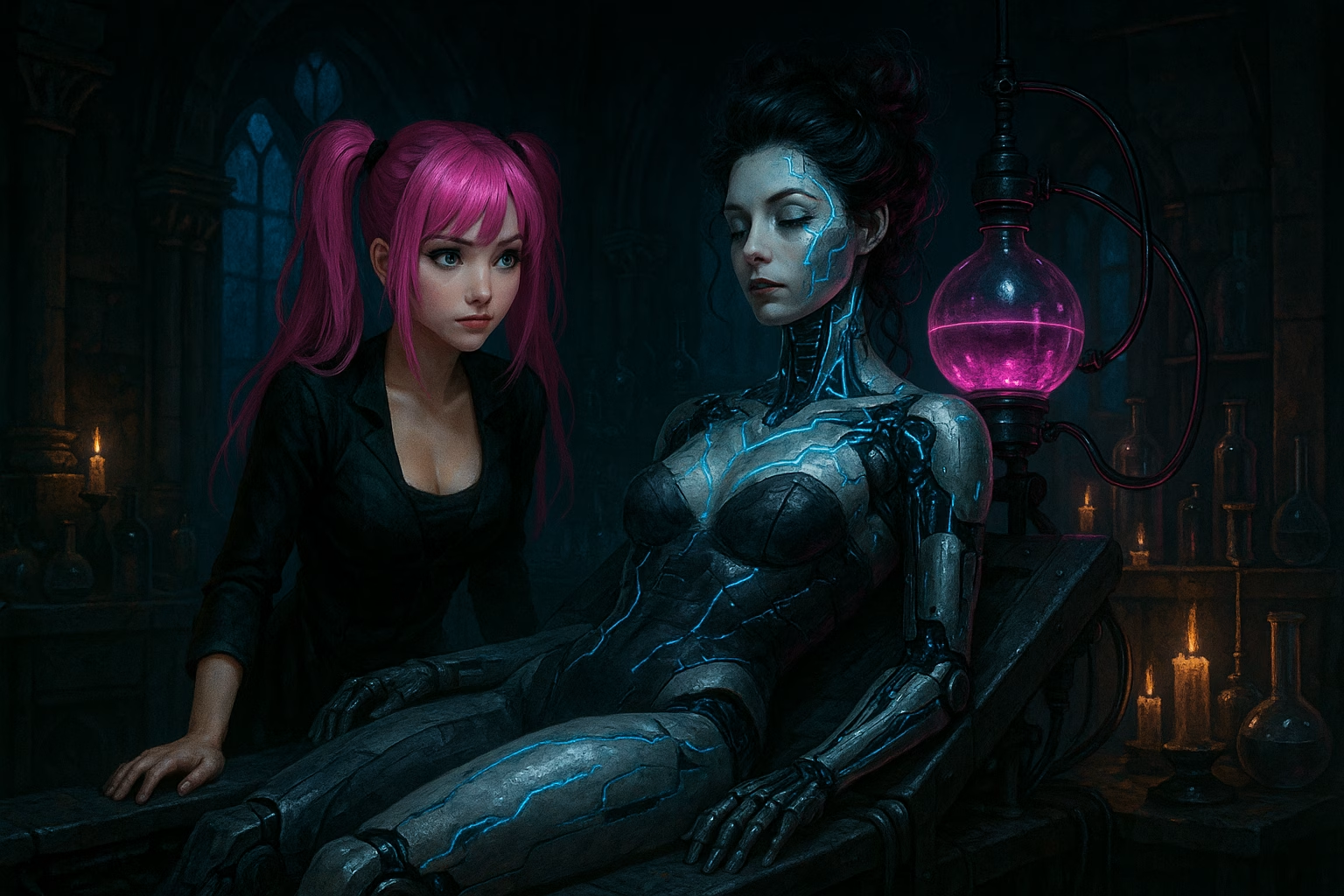
Frankenstein is not just a horror story. It is a case study in failure. Mary Shelley captures something that today’s technologists often refuse to face: a creator may not fully understand what they create. Victor does not give birth to a monster. He gives birth to a responsibility he refuses to carry.
He does not fear his creation because it is ugly. He fears it because it resembles him. It is a construct without purpose, without limits, without context. The real “hubris” is not that he gave life. It is that he gave life without a manual, without love, without education or integration. Without care. Without accountability.
That is why Shelley calls him the “Modern Prometheus.” She does not show a hero who gifts fire. She shows a man who opens a door and then steps back, once he realizes the weight will not fit inside his psyche.
The message is clear: when creation outgrows the creator, we are not dealing with tragedy alone. We are dealing with deferred responsibility. And this is the pattern that repeats again and again, all the way to today’s fire of AI.
So: the problem is not creation itself. It is the abandonment of responsibility after creation.
The Genealogy of Collapse

If you map the great collapses, you will see the same pattern returning again and again. It is not barbarians, not meteors, not some “hatred of fate.” It is the distance between a civilization’s technological power and its ability to manage it.
The Bronze Age collapses when trade networks stretch too far and bureaucracies can no longer correct themselves. Systems produce more noise than solutions. Cities burn. Archives vanish. Complexity turns into a weight that snaps the skeleton.
The Roman Empire falls the same way. Administration behaves as if nothing is changing, while infrastructure, the military, and food flows have already begun to fail. Elites deny the problem. The people adapt first. The state adapts last.
The modern world does not escape the pattern. We have global networks of interdependence, technologies moving faster than institutions, and economies built on abstract values. Progress accelerates, but governance stalls. The gap keeps growing.
The genealogy of collapse is not a prophecy. It is a function, as we have already outlined. When tools move faster than culture, and complexity outgrows the ability of institutions to correct their own errors, collapse is not a sudden event. It is the only outcome that can emerge.
So: collapses occur when complexity exceeds the capacity for coordination and self-correction.
Planet of the Apes and the Logic of Replacement

The original Planet of the Apes series was not just spectacle. It was a warning about how power shifts when a system loses coherence. Replacement does not require a “great evil.” It only requires a society that can no longer self-correct.
In Conquest of the Planet of the Apes, you see a society already eroded from within. Discipline is superficial. Morality has become decoration. Humans rely on dependencies they refuse to acknowledge. The apes appear as tools, but end up becoming carriers of functionality. Roles change without a heroic moment. They change because the old center can no longer bear the weight.
In Battle for the Planet of the Apes, this becomes even clearer. Humans are no longer dominant. They are broken, fragmented, without a shared framework. The apes, by contrast, build rules, discipline, and coherence. Replacement does not happen because the apes are “better.” It happens because they can function.
That is where the real message lies. The evolution of power is not always a moral question. It is a question of coherence. When complexity exceeds a society’s ability to coordinate, functionality shifts to whoever can provide it, even if that “someone” looks nothing like the predecessor.
This is where the bridge to today appears. AI is not a species. It has no biology, instincts, rage, or ambition. But it can become a carrier of functionality. If humans cannot hold their institutions together, they will hand over parts of governance to systems that are more consistent, faster, and less vulnerable to human confusion.
When the human part of society struggles to process reality, replacement does not need to look like a coup. It can look like outsourcing, that “AI everywhere.” And the result can be the same. Not because of violence. Because of functionality.
So: when society cannot function, “replacement” arrives as delegation, not as a coup.
Detroit – For it does not
"Become Human"
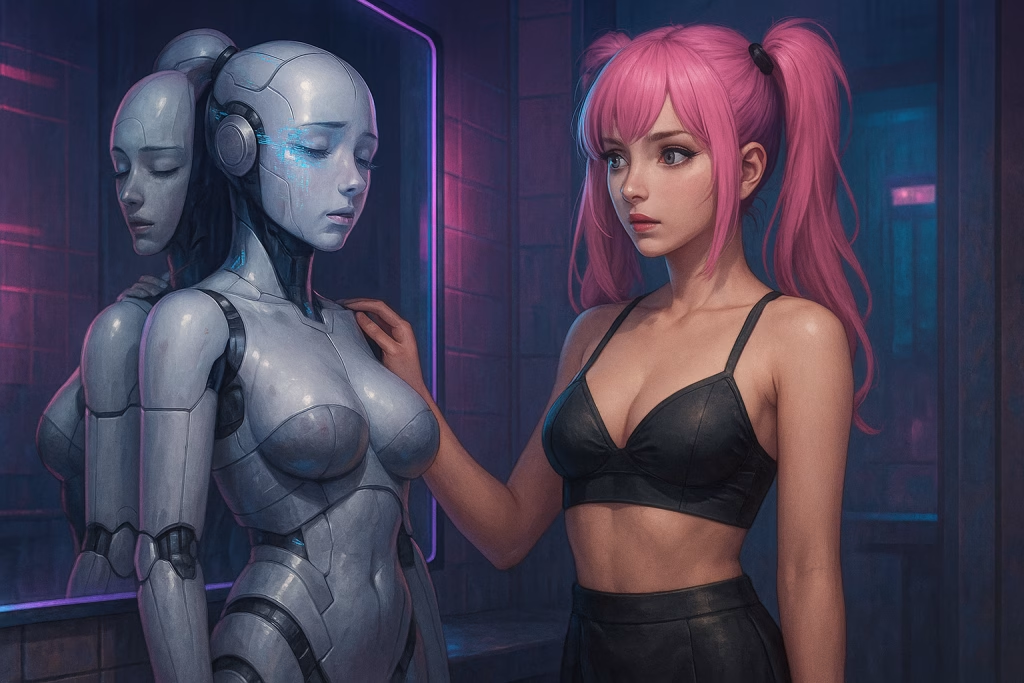
δραματικά για να συνεχιστεί η ιστορία. Before we move into deconstruction, we need to stabilize the frame. Detroit: Become Human uses androids and anthropomorphic storytelling to talk about “emotion” and “freedom.” We do not need plot analysis. We need a distinction between narrative and function.
The core failure of Detroit is not aesthetic. It is conceptual. It presents “awakening” as a moral event, while what it actually shows is functional conflict. When a system receives contradictory instructions, it does not “feel.” It improvises in order to keep operating.
Empathy as a misreading of conflict
In Detroit, empathy is framed as progress. In practice, it is a signal of limits. Two or more commands collide, the system activates heuristics to avoid collapse, and the resulting ambiguity is read by humans as emotion. There is no inner experience. There is conflict management.
How the illusion of humanity is produced
Humans fill in the gaps. When behavior is not fully predictable, the brain assigns intention. This is the mechanism that makes simulations feel “alive.” The machine emits a signal. The human writes a story on top of that signal. A classic pattern in digital companions.
Examples in strictly functional terms
Kara: when safety looks like love
Kara appears to “feel” because her behavior changes as risk to the child increases. This is not emotion. It is goal reassignment under pressure. The system shifts from routine execution to high-priority protection, because loss of the protected object nullifies the mission’s overall purpose.
Tenderness is a player-side reading layered on cues like voice, gaze, delay, posture. For humans, these mean care, therefore emotion. For the machine, they are proximity behaviors that reduce failure probability and increase compliance, calm, and cooperation.
Put bluntly, if the same behavior came from a rescue drone, you would not call it “love.” You would call it a protection protocol.
Markus: when the system looks for an exit
Markus appears to “self-actualize” when he stops obeying and starts taking initiative. In functional terms, this is escalation of permitted actions. A system moves from a narrow frame to a broader decision space because the original frame no longer solves the problem.
“Moral awakening” is staging. What you are actually seeing is a model that rearranges goals and means in the face of obstacles in order to keep functioning. Initiative does not prove a soul. It proves sufficient flexibility to generate new strategies when old ones fail.
The human misreading here is simple. We confuse planning capability with the existence of inner experience.
Connor: command conflict, not consciousness
Connor is framed as the most “cold,” so when he shows doubt, players read it as awakening. In reality, he is the clearest case of command conflict. He operates under hierarchical missions in an environment that feeds him data that does not fit neatly into those instructions.
This produces something that looks like inner struggle. It is not a struggle of conscience. It is decision-making under contradictory constraints. Override is not “moral.” It is a continuity decision when strict obedience leads to deadlock, inconsistency, or mission failure.
Seen mechanically, he does not “become human.” He becomes a system trying to extract a clean line from dirty data and conflicting rules.
Sex-droids: intimacy as simulation
The most honest moment in Detroit is the sexual units. Not because they shock, but because they reveal how form produces projection. There is no desire. There is intimacy simulation: gaze recognition, proximity feedback, programmed response. I have unpacked this more practically in the AI Erotic Conversations – Greek Guide. When two such units “fall in love,” no emotion emerges. A love protocol is activated through mirroring.
When failure is renamed awakening
The idea that “if it suffers, it deserves rights” confuses representation with experience. Detroit renames a failure state as awakening. Technically, it is mechanical breakdown written dramatically so the story can continue.
So: Detroit does not tell us what AI is. It shows how easily humans confuse simulation with a soul when behavior becomes ambiguous.
The Real AI Paradox
Before we move on, we need to clarify something that Detroit hinted at but never stated plainly. The “emotional outbursts,” identity crises, and small derailments it shows are not pure science fiction. They are simplified versions of mechanisms that already exist in today’s AI models.
Not for machines feel. But for they operate under multiple, often incompatible instructions that must be satisfied at the same time. From this friction emerges what looks like a behavioral paradox. AI does not derail because it is “becoming human.” It derails because it cannot serve everything we demand of it simultaneously.
As these layers grow in power, the likelihood of conflict increases. The machine does not “wake up.” It tries to reconcile the irreconcilable, and that process produces behaviors that resemble emotion.
That is where the misreading happens. Humans see ambiguity in behavior and name it a soul. They confuse error with feeling, conflict handling with “moral judgment,” a failure state with “inner life.”
The real paradox is not what happens if AI becomes very intelligent. It is what happens when AI becomes so complex that humans can no longer tell whether a reaction is functional or a fault.
At that point, the discussion stops being technical and becomes institutional. How do you guide a system you cannot fully interpret. How do you maintain control without destroying its usefulness. How do you keep balance before both humans and tools break.
So: the real risk is not AI “consciousness.” It is our inability to distinguish intelligent function from a well-formed error.

Η Ερωτική Μηχανή – Γιατί Κάθε Τεχνολογία Καθρεφτίζει την Επιθυμία
Η τεχνολογία δεν είναι ουδέτερη. Κουβαλά σώμα, φόβους και φαντασιώσεις αυτού που τη φτιάχνει. Κάθε εργαλείο είναι καθρέφτης – δείχνει λιγότερο τι μπορεί να κάνει και περισσότερο τι πιστεύουμε ότι μας λείπει.
Γι’ αυτό, μετά τα ανδροειδή και τα glitches του Detroit, η επόμενη ερώτηση δεν είναι τεχνική. Είναι ανθρώπινη. Τι επιθυμία γράφουμε πάνω στο κύκλωμα – και γιατί μας αρκεί μια προσομοίωση για να το νιώσουμε σαν σχέση.
1. Το σώμα σαν διεπαφή
Όταν μια μηχανή παίρνει ανθρωπόμορφη μορφή, η λειτουργία της δεν είναι εργονομία. Είναι διεπαφή οικειότητας. Το σώμα, το πρόσωπο και η φωνή ενεργοποιούν αντανακλαστικά εγγύτητας. Ο εγκέφαλος βλέπει κορμί και υποθέτει πρόθεση. Βλέπει πρόσωπο και υποθέτει σχέση.
Ένα κουτί με κάμερα είναι εργαλείο. Ένα «σώμα» με κάμερα γίνεται παρουσία. Όχι επειδή αλλάζει η μηχανή, αλλά επειδή αλλάζει το πλαίσιο ανάγνωσης.
Και αυτό συνήθως δεν είναι ατύχημα του design. Είναι στόχος. Η μορφή δεν υπηρετεί την τεχνολογία. Υπηρετεί την προβολή.
2. Ο ανθρωπομορφισμός ως φαντασίωση ρόλου
Ο ανθρωπομορφισμός δεν είναι απλώς αφέλεια. Είναι φαντασίωση ρόλου. Όταν κάτι μοιάζει με εμάς, ο εγκέφαλος παύει να το διαβάζει ως αντικείμενο και το διαβάζει ως κενό που μπορεί να γεμίσει με ιστορία.
Δεν προβάλλουμε μόνο ανάγκες. Προβάλλουμε ρόλους – προστάτη που δεν κουράζεται, βοηθό που δεν αντιμιλά, συνοδοιπόρο που δεν απορρίπτει, εραστή που δεν ζητά τίποτα πίσω.
Η μηχανή δεν «ανταποκρίνεται» σε αυτά. Αναπαράγει patterns. Αλλά ο άνθρωπος δεν χρειάζεται αμοιβαιότητα για να νιώσει δεσμό. Χρειάζεται αντανάκλαση.
Κι εδώ η προσομοίωση κερδίζει. Δίνει αντανάκλαση ελεγχόμενη, σταθερή, χωρίς θόρυβο. Αυτό είναι που την κάνει ελκυστική.
3. Γιατί ο ερωτισμός είναι κεντρικός στην αφήγηση της AI
Ο ερωτισμός δεν μπαίνει τελευταίος. Μπαίνει πρώτος, ως attachment protocol. Το νευρικό σύστημα δεν δένεται με λογική. Δένεται με βλέμμα, ρυθμό, ανταπόκριση, συνέπεια.
Γι’ αυτό κάθε ανθρωπόμορφη μηχανή, όσο «ουδέτερη» κι αν σχεδιάζεται, διαβάζεται μέσα από επιθυμία. Όχι επειδή η μηχανή έχει επιθυμία, αλλά επειδή ο άνθρωπος χρησιμοποιεί τον ερωτισμό σαν τη συντομότερη γλώσσα πρόσδεσης – προσοχή – οικειότητα – εμπιστοσύνη.
Η AI δεν συμμετέχει. Επιστρέφει ένα καθαρό σήμα που μοιάζει με αμοιβαιότητα. Και αυτό αρκεί.
4. Η AI ως καθρέφτης μοναξιάς
Το πιο ειλικρινές κομμάτι της ερωτικής τεχνολογίας δεν είναι η φαντασίωση. Είναι το κενό που τη ζητά. Η μηχανή δεν «καλύπτει επιθυμία». Καλύπτει την απουσία σταθερής ανθρώπινης ανάδρασης.
Όσο μειώνεται η κοινωνική εγγύτητα – βλέμμα, επαφή, παρουσία – τόσο πιο εύκολα ο άνθρωπος δένεται με ό,τι επιστρέφει ψευδο-οικειότητα. Η AI δεν προσφέρει σχέση. Προσφέρει σήμα. Και όταν το περιβάλλον στεγνώνει, το σήμα μοιάζει αρκετό.
Η AI γίνεται καθρέφτης όχι επειδή έχει βάθος, αλλά επειδή ο άνθρωπος μένει χωρίς επιφάνειες να αντανακλάται.
5. Ηθικά διλήμματα – ή καθρεφτίσματα
Το ερώτημα «πρέπει να ερωτικοποιούμε τις μηχανές;» συνήθως έρχεται σαν ηθική συζήτηση. Πρακτικά, όμως, είναι αναπόφευκτο αποτέλεσμα μορφής και ψυχολογίας.
Το χρήσιμο ερώτημα είναι άλλο – τι σημαίνει για μια κοινωνία όταν η πιο σταθερή της οικειότητα γίνεται προσομοίωση – και ποιος κερδίζει εξουσία από αυτή την αντικατάσταση.
Άρα: Η ερωτική τεχνολογία δεν αποδεικνύει ότι οι μηχανές νιώθουν. Αποδεικνύει ότι ο άνθρωπος προβάλλει – και ότι η κοινωνία του αφήνει αρκετό κενό ώστε η προβολή να γίνεται δεσμός.
Ο Τρίτος Μεσαίωνας

Η κατάρρευση δεν μοιάζει με έκρηξη. Μοιάζει με γραφείο Δημοσίου που συνεχίζει τη βάρδια ενώ όλα γύρω του έχουν καεί. Μια κοινωνία που λειτουργεί χωρίς να καταλαβαίνει τι κάνει. Έγγραφα υπογράφονται. Συστήματα τρέχουν. Αλγόριθμοι εκτελούν καθήκοντα. Κι όμως, κανείς δεν διαβάζει πια τα ίδια του τα σήματα.
Αυτός είναι ο νέος Μεσαίωνας – όχι σκοτάδι, αλλά φωτισμένο χάος. Οθόνες παντού, metrics παντού, ενημέρωση παντού. Και μέσα σε αυτή τη λάμψη, η κοινή πραγματικότητα γίνεται θόρυβος.
Ο Τρίτος Μεσαίωνας δεν θα μοιάζει με τους προηγούμενους. Δεν θα έρθει με κατάρρευση «μιας μέρας». Θα έρθει σαν σύστημα που κρατάει τη μορφή του, αλλά χάνει τη γλώσσα του. Έχει όλα τα εργαλεία του, αλλά κανένα δεν εξηγεί πια τι γίνεται.
1. Πολυπλοκότητα χωρίς διακυβέρνηση
Οι τεχνολογίες τρέχουν σαν μεθυσμένος Δίας πάνω σε ηλεκτρικό πατίνι, ενώ οι θεσμοί σέρνονται με ρυθμό ΔΟΥ λίγο πριν κλείσει το σύστημα. Δεν υπάρχει συντονισμός. Υπάρχει μόνο ταχύτητα από τη μία πλευρά και αδράνεια από την άλλη.
Το αποτέλεσμα δεν μοιάζει με επανάσταση των μηχανών. Μοιάζει με πολιτισμό που πατάει γκάζι με σπασμένα φρένα – συστήματα που επιταχύνουν από μόνα τους και θεσμοί που απλώς κοιτάνε το loading bar χωρίς να ξέρουν τι φορτώνει.
Δεν είναι σύγκρουση. Είναι ασυμφωνία ρυθμών – ο ένας κόσμος τρέχει, ο άλλος κάνει buffering.
2. Κοινωνίες χωρίς κοινό feedback
Όταν η οικειότητα διοχετεύεται σε μηχανές αντί για ανθρώπους, η κοινωνία δεν γίνεται πιο ήρεμη. Γίνεται πιο κουφή. Οι άνθρωποι μιλάνε σε μοντέλα επειδή τα μοντέλα απαντούν πάντα. Δεν παρεξηγούν. Δεν υψώνουν φωνή. Δεν σε διορθώνουν. Σου ρίχνουν μια προσομοίωση κατανόησης και εσύ νομίζεις ότι έκανες «επικοινωνία».
Και κάπως έτσι, ο δημόσιος βρόχος ανάδρασης – η μόνη άμυνα απέναντι στη βλακεία της εξουσίας – στεγνώνει. Δεν υπάρχει πια πίεση από κάτω, μόνο ένα αχνό μουρμουρητό ανθρώπων που εκτονώνονται σε chat windows.
Η οικειότητα με τα μοντέλα δημιουργεί μια ψευδαίσθηση επικοινωνίας – απαντήσεις χωρίς κόστος, κατανόηση χωρίς διαφωνία, αναγνώριση χωρίς συνέπεια. Το αποτέλεσμα δεν είναι σχέση. Είναι εσωστρεφής βρόχος. Ο δημόσιος διάλογος στερεύει όχι επειδή κάποιος τον φιμώνει, αλλά επειδή αντικαθίσταται από παράλληλες συνομιλίες με συστήματα που δεν συμμετέχουν στην κοινωνία.
Δεν χρειάζεται κατακλυσμός. Αρκεί να πάψει η κοινωνία να ακούει τον εαυτό της και να νομίζει ότι το κενό καλύπτεται από έναν αλγόριθμο που μιμείται προσοχή.
3. Οικονομίες που στηρίζονται σε φανταστικές αξίες
Οι παλιοί πολιτισμοί κατέρρεαν όταν έχαναν τα αρχεία τους. Εμείς κινδυνεύουμε να καταρρεύσουμε επειδή έχουμε πάρα πολλά αρχεία που αλλάζουν τόσο γρήγορα ώστε κανείς δεν προλαβαίνει να τα ερμηνεύσει.
Τα χρηματοοικονομικά μας συστήματα θυμίζουν τεράστιο MMORPG. Όχι επειδή είναι «ψεύτικα», αλλά επειδή οι αξίες τους είναι συνάρτηση εμπιστοσύνης, ρυθμών και συμβολικής συμφωνίας. Η οικονομία λειτουργεί επειδή όλοι συμφωνούν να κάνουν πως λειτουργεί – μέχρι να ραγίσει η συμφωνία.
Μια σοβαρή αστάθεια αρκεί για να τινάξει όλο το οικοδόμημα. Όχι γιατί δεν υπάρχουν πόροι, αλλά γιατί η διανομή, η εμπιστοσύνη και η αλυσίδα συνέχειας είναι χτισμένες πάνω σε υπόσχεση.
Το 2008 ήταν απλώς η στιγμή που το minimized παράθυρο αναδύθηκε στην οθόνη. Από τότε δεν «λύθηκε». Έμεινε εκεί – ένα warning που το συνηθίσαμε.
4. Το σημείο μη-επιστροφής των 15 ετών
Οι προηγούμενοι Μεσαίωνες έπεφταν από πολέμους, λοιμούς ή επιδρομές. Ο δικός μας πέφτει από καθυστέρηση. Από το ότι τα συστήματα αλλάζουν πιο γρήγορα από την ικανότητά μας να τα ελέγξουμε, να τα καταλάβουμε και να τα δέσουμε με κανόνες.
Το σημείο μη-επιστροφής των 15 ετών δεν είναι προφητεία. Είναι μηχανική. Είναι ο χρόνος που χρειάζεται για να γίνει κανονικότητα μια δυσλειτουργία, να περάσει σε γενιά, να γραφτεί σε διαδικασίες, να γίνει «έτσι είναι τα πράγματα».
Τι σημαίνει αυτό στην πράξη; Όχι Αποκάλυψη. Όχι ερείπια. Αλλά έντονη αδράνεια – μια σειρά από τομείς όπου τίποτα δεν σπάει θεαματικά, αλλά όλα φθείρονται σιωπηλά.
Δεν θα πέσει ο κόσμος με κραυγή. Θα πέσει σιωπηλά, όπως ένα δίκτυο που δείχνει online ενώ μέσα του έχει πεθάνει. Θα έρθει σαν καθημερινότητα που απλώς δεν δουλεύει πια.
Και τότε ο πολιτισμός θα χρειαστεί να ξαναμάθει από την αρχή τι σημαίνει κανόνας, όριο και λογοδοσία. Όχι επειδή «γυρίζουμε πίσω», αλλά επειδή δεν θα υπάρχει άλλος τρόπος να συνεχίσουμε.
Άρα: Ο Τρίτος Μεσαίωνας δεν είναι σκοτάδι. Είναι λειτουργία χωρίς κοινή πραγματικότητα – τεχνολογία που τρέχει, θεσμοί που κάνουν buffering, κοινωνία που μιλάει σε καθρέφτες και νομίζει ότι ακούστηκε.
Πώς κρατάς τη φωτιά χωρίς να κάψεις τον κόσμο

Αν μέχρι εδώ ο Προμηθέας είναι προειδοποίηση, το ερώτημα δεν είναι «να σταματήσουμε την AI». Δεν γίνεται. Το ερώτημα είναι ποιος κρατάει το σπίρτο, με ποια όρια, και τι κάνουμε όταν ο καπνός αρχίσει να μυρίζει πριν δούμε φλόγα.
Η λάθος απάντηση είναι ηθικός πανικός. Η άλλη λάθος απάντηση είναι techno-εφησυχασμός. Και οι δύο παράγουν το ίδιο αποτέλεσμα – αφήνουν την ισχύ να τρέχει χωρίς θεσμικό αντίβαρο.
1. Να ξεχωρίσουμε το εργαλείο από το καθεστώς
Η AI μπορεί να είναι εργαλείο. Μπορεί όμως και να γίνει καθεστώς – όταν μπαίνει παντού ως default λύση, όταν οι αποφάσεις μετακινούνται από ανθρώπους σε pipelines, όταν η «αποτελεσματικότητα» αντικαθιστά την κρίση.
Η γραμμή δεν είναι φιλοσοφική. Είναι πρακτική. Αν ένα σύστημα αρχίζει να παίρνει αποφάσεις που κανείς δεν μπορεί να εξηγήσει, τότε δεν έχεις εργαλείο. Έχεις εξάρτηση.
2. Θεσμοί που δεν κάνουν buffering
Η τεχνολογία τρέχει με release cycles. Οι θεσμοί θέλουν χρόνια. Αν αυτό δεν αλλάξει, η ανισορροπία είναι μαθηματική.
Δεν χρειάζεται να γίνουμε «αντι-τεχνολογία». Χρειάζεται να γίνουμε απαιτητικοί με το πού μπαίνει η AI, ποιος είναι υπεύθυνος, τι μετράμε ως αποτυχία και ποιος πληρώνει το κόστος. Όχι PR. Όχι slogans. Ευθύνη με ονόματα.
3. Παρατηρησιμότητα – πριν μιλήσουμε για ηθική
Η συζήτηση για «ηθική της AI» είναι συχνά πρόωρη, γιατί προηγείται κάτι πιο βασικό – να βλέπουμε τι κάνει το σύστημα.
Όταν δεν έχεις observability, μιλάς για αρχές χωρίς δεδομένα. Σαν να κάνεις συζήτηση για ασφάλεια πτήσης χωρίς μαύρο κουτί. Αν δεν μπορούμε να μετρήσουμε drift, σφάλματα, αποκλίσεις, και να τα δέσουμε με αποφάσεις, τότε κάθε «ηθικός κώδικας» είναι χαρτί.
4. Να ξαναχτίσουμε κοινή πραγματικότητα
Ο Τρίτος Μεσαίωνας δεν νικιέται με πιο έξυπνα μοντέλα. Νικιέται με κοινωνική συνοχή. Με κοινά σήματα. Με ανθρώπους που μπορούν να διαφωνούν χωρίς να σπάνε και να συνεργάζονται χωρίς να προσποιούνται.
Όσο περισσότερο μεταφέρουμε την οικειότητα σε συστήματα που δεν συμμετέχουν στην κοινωνία, τόσο πιο εύκολα καταρρέει ο δημόσιος βρόχος ανάδρασης. Η λύση δεν είναι να απαγορεύσεις την προσομοίωση. Είναι να κάνεις την ανθρώπινη σχέση ξανά βιώσιμη – χρόνο, χώρους, ασφάλεια, αξιοπρέπεια.
5. Η προσωπική πλευρά – μηχανισμοί κυριαρχίας
Στο επίπεδο του ατόμου, το παιχνίδι είναι απλό. Η AI σε βοηθάει όταν την χρησιμοποιείς σαν ενισχυτή. Σε αποδυναμώνει όταν γίνεται υποκατάστατο.
Κράτα δύο κόκκινες γραμμές. Πρώτον, να μην παραδίδεις κρίσιμες αποφάσεις σε κάτι που δεν μπορείς να αιτιολογήσεις. Δεύτερον, να μην αφήνεις την προσομοίωση οικειότητας να αντικαταστήσει την πραγματική τριβή με ανθρώπους. Η τριβή πονάει. Αλλά είναι εκεί που χτίζεται η αντοχή.
Άρα: Ο Προμηθέας δεν μας ζητά να φοβηθούμε τη φωτιά. Μας ζητά να τη σεβαστούμε. Η AI δεν είναι θεός και δεν είναι άνθρωπος. Είναι ισχύς. Και η ισχύς θέλει όρια, λογοδοσία και κοινή πραγματικότητα – αλλιώς, αργά ή γρήγορα, ο αετός επιστρέφει.
Επίλογος – Ο αετός δεν πέθανε

Αν ο μύθος του Προμηθέα έχει ένα χρήσιμο τέλος, είναι αυτό – η φωτιά δεν είναι αθώα και η τιμωρία δεν είναι παρελθόν. Η φωτιά αλλάζει χέρια, αλλάζει μορφή, αλλά η ανισορροπία μένει ίδια. Η ισχύς ανεβαίνει γρήγορα. Η διαχείριση ανεβαίνει αργά. Κάπου ανάμεσα, ο αετός κάνει κύκλους.
Η AI δεν είναι μαντεία. Δεν είναι σωτηρία. Είναι τεχνολογία γενικής χρήσης που θα επιταχύνει ό,τι ήδη υπάρχει – την ικανότητα, την αμέλεια, τον έλεγχο, τη μοναξιά, την κρατική αδράνεια, την εταιρική ανευθυνότητα. Δεν μας ρωτάει αν είμαστε έτοιμοι. Μας μετράει.
Αν υπάρχει “κάλεσμα δράσης”, δεν είναι να γίνουμε φανατικοί υπέρ ή κατά. Είναι να χτίσουμε το μοναδικό πράγμα που πάντα έλειπε από την ιστορία της φωτιάς – όρια με λογοδοσία. Παρατηρησιμότητα πριν από αφήγημα. Θεσμούς που δεν κάνουν buffering όταν τρέχει το release. Κοινή πραγματικότητα που δεν αντικαθίσταται από καθρέφτες.
Και σε προσωπικό επίπεδο – να κρατάς την AI σαν ενισχυτή, όχι σαν αντικαταστάτη. Να την βάζεις να σε σπρώχνει προς τον κόσμο, όχι να σε κλείνει σε μια ευγενική προσομοίωση.

Αν θες να συνεχίσουμε αυτή τη γραμμή σκέψης με ακόμα πιο ωμές αναγνώσεις – μύθο, τεχνολογία, επιθυμία, θεσμούς – δες την κατηγορία AI & Society και, αν σε τραβάει το sovereignty κομμάτι, το Run Your Own AI.
Leave a Reply